
plasticman
Well-Known Member
- Messages
- 13,404
- Reaction score
- 21,460
The game of football generally follows a military type structure. A well-defined chain of command is a critical component of an efficient and capable military. Any ambiguity in command, any contradiction in orders could result in losing a battle and incurring devastating losses.
Different orders coming from two different leaders would cause confusion and several components of strategically placed resources are split. This is why, in the military, the chain of command is typically restricted to one immediate supervisor for every individual soldier. Then, these individual supervisors have their individual commander.
Organization and discipline are critical if there is to be a cohesive, effective, and successful military campaign. This requires three components:
There has to be personal accountability. Only one person is responsible for results at each level of operation. Only one person at that level will receive the consequences of the results of that operation. Consequences could be positive or negative
This means that areas of responsibility must be well-defined. That person must know exactly what is required of him, the benefits of success, the consequences of failure.
The person given the responsibility must have the authority to issue instructions and expect them to be carried out. This authority is issued at the highest level, the Commander of the military.
There are three conditions that severely compromise the success of an operation:
Individuality or lack of discipline means the decision to choose your own role in an operation. It will destroy the combined efforts of the group.
Ambiguity in areas of responsibility (“Who’s in charge?”) creates confusion because those in charge don’t really know what they are in charge of. They may issue conflicting instructions. They may feel it is not their place to issue any instructions. The group doesn’t have a clear understanding of who is in charge, who do they follow? And who will be held accountable?
In the event that responsibility is given to more than one person (decision by committee), the delay before coming to agreement seriously jeopardizesreaction to immediate urgent issues and erodes accountability and discipline. If a subordinate does not like instructions of one supervisor he may decide to go to another until he obtains the instructions he favors. You can’t be successful when half the group is instructed to do something different than the other half.
Lack of accountability means there are not consequences or reward for success or failure. This seriously decreases the commitment, dedication, degree and effort of those responsible for the results of a task. What’s in it for them? So what, if the task fails, nothing changes for them. They are not the worse or better for it. Why should maximum effort be expected when any degree of effort will result in the current circumstances?
In football, the concepts of discipline, accountability and consequences are known as “teamwork”. Great teams are those that possess the best traits of teamwork, quickly obeying orders and carrying them out efficiently and to the best of their ability.
Just as individuality, lack of responsibility, and confusion kills in the military, it creates defeat in football.
The best Head Coaches in history, as a result, are those that were known as authoritarians, instilling the most discipline on their team. They typically achieved this by earning respect through their successful reputation or demanding it through their coaching philosophy. Yes, the most successful head Coaches in history were the most tyrannical
This list of strong willed, no nonsense, “My way or the highway” attitudes include Don Shula, Vince Lombardi, Chuck Noll, and Bill Belicik. It included Jimmy Johnson and Bill Parcells
It most certainly included former 2nd Lieutenant and B-17 bomber co-pilot Thomas Wade Landry:
"Leadership is getting someone to do what they don't want to do, to achieve what they want to achieve."
"The secret to winning Is constant, consistent management."
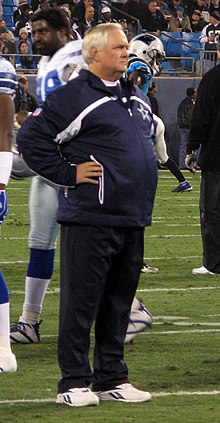
In 2010 the Cowboys had a very curious structure of management. The designated Head Coach was Wade Phillips. The offensive coordinator was Jason Garrett.
Wade Phillips was also the defensive coordinator, which can be considered somewhat of a reduntant title. If a person is a Head Coach then he is in charge of the entire team. He is basically the combined senior defensive coordinator, senior offensive coordinate and senior special teams coordinator. He hires other coaches to perform the coordinator tasks which he decides to allocate.
However, in this instance, the GM, who is the Head Coaches immediate supervisor, decided thaty the offensive coordinator would be accountable directly to him. In other words, Wade Philips was not in Jason Garrett’s immediate chain of command except in those circumstances where the GM could not actively make decisions. That would be formal practices and games.
This effectively removed the authority of Wade Philips to make decisions concerning the Cowboy offense except during game time conditions. He had no voice in creating an offensive strategy. This is why he said he didn’t know why certain decisions were made on offense during media interviews. This structure also made it impossible to synchronize a defensive strategy with the offensive strategy to complete an overall team strategy. They were disjoint and independant of each other. No matter what was happening on defense, the offense would continue their strategy.
To put it more bluntly, Wade Philips was no longer the Head Coach although he had the title. He only made “sideline” decisions.
So who was in charge of the team as a whole? Well, if the Head coach is the defensive coordinator answering directly to the GM and the offensive coordinator answers directly to the GM, doesn’t that make the answer pretty simple?
The result was a 1-7 first half record, the dismissal of a Head Coach for not achieving something he was never given the authority to do, and the promotion of the offensive coordinator that was already answering directly to the GM. Those were the consequences for Wade Philips.
What were the consequences for the GM?
They were the same consequences for three consecutive 5-11 seasons that cannot be labeled as “rebuilding”. They were the same consequences for a losing team considered a “dynasty” just two years previously. They were the same consequences that will be given for the results of this season. They are the same consequences for not reaching a single conference championship round playoff game in over 20 years.
Since the GM is ultimately responsible for hiring the Head Coach, he then ultimately responsible for the consistant failure of their combined efforts. It is not the choice of Head Coach that is the issue. It is the very content of this post.
Where does Jerry Jones end and Jason Garrett begin? Who is responsible for what? Where is the well-defined explanation as to who is making the specific decisions that decided the success or failure of this team?
How can consequences be fairly and justly dispensed when the degree of accountability is so confusing? Is it game strategy, personnel decisions, quality and expertise management and coaching…..what is it?
One thing we do know, it starts at the top and it begins with consequences
……or it never ends.
Different orders coming from two different leaders would cause confusion and several components of strategically placed resources are split. This is why, in the military, the chain of command is typically restricted to one immediate supervisor for every individual soldier. Then, these individual supervisors have their individual commander.
Organization and discipline are critical if there is to be a cohesive, effective, and successful military campaign. This requires three components:
There has to be personal accountability. Only one person is responsible for results at each level of operation. Only one person at that level will receive the consequences of the results of that operation. Consequences could be positive or negative
This means that areas of responsibility must be well-defined. That person must know exactly what is required of him, the benefits of success, the consequences of failure.
The person given the responsibility must have the authority to issue instructions and expect them to be carried out. This authority is issued at the highest level, the Commander of the military.
There are three conditions that severely compromise the success of an operation:
Individuality or lack of discipline means the decision to choose your own role in an operation. It will destroy the combined efforts of the group.
Ambiguity in areas of responsibility (“Who’s in charge?”) creates confusion because those in charge don’t really know what they are in charge of. They may issue conflicting instructions. They may feel it is not their place to issue any instructions. The group doesn’t have a clear understanding of who is in charge, who do they follow? And who will be held accountable?
In the event that responsibility is given to more than one person (decision by committee), the delay before coming to agreement seriously jeopardizesreaction to immediate urgent issues and erodes accountability and discipline. If a subordinate does not like instructions of one supervisor he may decide to go to another until he obtains the instructions he favors. You can’t be successful when half the group is instructed to do something different than the other half.
Lack of accountability means there are not consequences or reward for success or failure. This seriously decreases the commitment, dedication, degree and effort of those responsible for the results of a task. What’s in it for them? So what, if the task fails, nothing changes for them. They are not the worse or better for it. Why should maximum effort be expected when any degree of effort will result in the current circumstances?
In football, the concepts of discipline, accountability and consequences are known as “teamwork”. Great teams are those that possess the best traits of teamwork, quickly obeying orders and carrying them out efficiently and to the best of their ability.
Just as individuality, lack of responsibility, and confusion kills in the military, it creates defeat in football.
The best Head Coaches in history, as a result, are those that were known as authoritarians, instilling the most discipline on their team. They typically achieved this by earning respect through their successful reputation or demanding it through their coaching philosophy. Yes, the most successful head Coaches in history were the most tyrannical
This list of strong willed, no nonsense, “My way or the highway” attitudes include Don Shula, Vince Lombardi, Chuck Noll, and Bill Belicik. It included Jimmy Johnson and Bill Parcells
It most certainly included former 2nd Lieutenant and B-17 bomber co-pilot Thomas Wade Landry:
"Leadership is getting someone to do what they don't want to do, to achieve what they want to achieve."
"The secret to winning Is constant, consistent management."
In 2010 the Cowboys had a very curious structure of management. The designated Head Coach was Wade Phillips. The offensive coordinator was Jason Garrett.
Wade Phillips was also the defensive coordinator, which can be considered somewhat of a reduntant title. If a person is a Head Coach then he is in charge of the entire team. He is basically the combined senior defensive coordinator, senior offensive coordinate and senior special teams coordinator. He hires other coaches to perform the coordinator tasks which he decides to allocate.
However, in this instance, the GM, who is the Head Coaches immediate supervisor, decided thaty the offensive coordinator would be accountable directly to him. In other words, Wade Philips was not in Jason Garrett’s immediate chain of command except in those circumstances where the GM could not actively make decisions. That would be formal practices and games.
This effectively removed the authority of Wade Philips to make decisions concerning the Cowboy offense except during game time conditions. He had no voice in creating an offensive strategy. This is why he said he didn’t know why certain decisions were made on offense during media interviews. This structure also made it impossible to synchronize a defensive strategy with the offensive strategy to complete an overall team strategy. They were disjoint and independant of each other. No matter what was happening on defense, the offense would continue their strategy.
To put it more bluntly, Wade Philips was no longer the Head Coach although he had the title. He only made “sideline” decisions.
So who was in charge of the team as a whole? Well, if the Head coach is the defensive coordinator answering directly to the GM and the offensive coordinator answers directly to the GM, doesn’t that make the answer pretty simple?
The result was a 1-7 first half record, the dismissal of a Head Coach for not achieving something he was never given the authority to do, and the promotion of the offensive coordinator that was already answering directly to the GM. Those were the consequences for Wade Philips.
What were the consequences for the GM?
They were the same consequences for three consecutive 5-11 seasons that cannot be labeled as “rebuilding”. They were the same consequences for a losing team considered a “dynasty” just two years previously. They were the same consequences that will be given for the results of this season. They are the same consequences for not reaching a single conference championship round playoff game in over 20 years.
Since the GM is ultimately responsible for hiring the Head Coach, he then ultimately responsible for the consistant failure of their combined efforts. It is not the choice of Head Coach that is the issue. It is the very content of this post.
Where does Jerry Jones end and Jason Garrett begin? Who is responsible for what? Where is the well-defined explanation as to who is making the specific decisions that decided the success or failure of this team?
How can consequences be fairly and justly dispensed when the degree of accountability is so confusing? Is it game strategy, personnel decisions, quality and expertise management and coaching…..what is it?
One thing we do know, it starts at the top and it begins with consequences
……or it never ends.